ALL OF WARC
Case Studies Topics Trends News Data Event Reports Your Warc
Back to previous page

Marketers remain optimistic

LONDON: The global marketing community continues to be confident in the state of the industry, according to Warc's latest Global Marketing Index (GMI).

The headline GMI, which combines trends observed in trading conditions and staffing levels as well as marketing budgets, slipped slightly to 55.9 from 56.5 in May. But on a scale where values above 50 indicate a positive trend, the sector clearly remains optimistic about the near future.

Regionally, marketers in the Americas were most upbeat, with an index value of 58.6, the same as the previous month. Those in Asia Pacific were almost equally positive, recording a figure of 58.2, up from 56.7 in May.

Europe, with an index value of 53.0, was consistent with May's results. The region remains broadly positive in outlook as regards trading conditions and staffing levels, but is gloomy about marketing budgets, where the index continued a downward slide, from 49.7 in May to 48.3 in June,

Marketers in Asia Pacific, however, were bullish about budgets, as this index maintained its upward trend, reaching 55.5, the highest figure since the GMI began in October 2011. The Americas index slipped back from 58.0 to 56.3.

In terms of allocation of budgets by medium, the figures for digital (excluding mobile) and mobile indicated rapid expansion, with index values respectively of 72.9 and 68.8.

Other media sectors were stagnant or in decline, with TV on 50.4, press on 38.1 and radio on 44.7. Out of home, which had crept into positive territory last month, fell back to 48.5.

The other two constituent indexes of the headline GMI again performed well. The index of global trading conditions stood at 58.1 in June, one point down on the previous month but well ahead of the 54.1 recorded this time last year.

And the index of staffing levels was up 1.1 points to 57.1, with the Americas and Asia Pacific leading the way, both rising more than 2 points to 59.2. Europe, too, was up one point to 54.7, despite the pessimism over budgets.

Suzy Young, Data and Journals Director at Warc, said in a press release: "Globally, marketing budgets continued to rise in June but this stems from solid growth in the Americas and Asia Pacific. European marketers are less confident and have reduced budgets for a second month."

Data sourced from Warc, 20 June 2013

Print


VW focuses on effectiveness in China

CANNES/BEIJING: Volkswagen relied too much on short-term spending and awareness when marketing its vehicles in China before being shocked into remedial action, a leading company executive has said.

Chief marketing officer Alexi Orlov told an audience at the Cannes Lions festival, reported in The Guardian, that the automaker "had a terrible wake-up call in 2010 when we discovered much to our surprise and horror that we were only the 126th best ranked in China as best-loved brands".

He referred to the focus on awareness "but it was not awareness we should have been worried about but effectiveness".

Having identified the importance of referrals in Chinese culture – Orlov said 73% of car sales in China come from referral, compared to 24% in the US – VW created a campaign that had consumers sharing ideas about creating cars and which pushed the marque up to 75 in the brand rankings.

But Volkswagen's Chinese operations are likely to face a new challenge, linked to the government's anti-corruption crusade.

President Xi Jinping has said that government officials should not be seen driving foreign luxury cars, which has encouraged VW's Chinese partner, FAW Group, to resurrect its Hongqi brand, used by previous leaders such as Mao Zedong and Deng Xiaoping.

And while the relatively highly priced model is not expected to be a serious competitor in the general market, it is likely to become a player in the government car market where VW's Audi brand has found a niche.

Foreign Minister Wang Yi has already chosen a Hongqi H7 sedan as his official car, which experts said is a sign Chinese officials are setting their sights on national brands.

China Economic Review cited a leaked document indicating the government had spent $39bn on autos in one year and suggested that "for automakers such as Audi, being cut out of that market would be an exclusion of epic proportion".

Data sourced from The Guardian, China Daily, China Economic Review; additional content by Warc staff, 20 June 2013

Print


Brazil drives LatAm adspend growth

NEW YORK: Total adspend in Latin America is expected to increase 7.5% in 2013, with Brazil leading the way as it gears up for the World Cup in 2014, new figures have shown.

Estimates from eMarketer, the insights provider, forecast a 9% rise in Brazilian advertising expenditure to $20.2bn this year, when it will account for 54.6% of the $37bn total for the region.

And Brazil will continue to be the main driver of growth for the continent up to 2017, when its share of total advertising expenditure will reach 56.8%.

Mexico is also predicted to post above average growth this year, with an 8.4% rise taking it to a value of $4.6bn, accounting for 12.4% of the spending in the region.

Argentina, however, is expected to record a 6.7% drop in advertising spend, as the industry struggles with inflation and exchange rate fluctuations.

But eMarketer anticipated that advertising activity in those countries outside the top three would more than offset Argentina's losses, with an 11.1% rise taking the share of ad spending by these other countries to 22.6% this year, up from 21.8% in 2012.

Digital ad spending in the region is also growing fast, up 21.5% in 2013 to a total of $4.1bn, a figure which is predicted to double to $8.3bn by 2017.

Once again, Brazil dominates this channel, its total of £2.5bn in 2013 accounting for 60.1% of all digital adspend in the region.

But Mexico is the fastest-growing country in terms of digital spending, up 32.1% in 2013, and its share of the total is forecast to grow from 16% this year to 18.5% by 2017.

Argentina's growth is expected to be considerably slower, with only single digit increases predicted over the next four years.

Data sourced from eMarketer; additional content by Warc staff, 20 June 2013

Print


Indian brands behind on mobile

NEW DELHI: India's marketers have yet to fully understand the mobile marketing medium and to exploit the possibilities it offers in a nation with 900m mobile subscribers, industry experts have argued.

S. Yesudas, managing director, Indian subcontinent at media agency Vizeum, told the Economic Times that marketers first needed to properly appreciate the way consumers interacted with their devices before attempting to deliver branded messaging.

"Mobile has the maximum potential to create memorable connections as it is the most personal channel," he said. "But, much like what happened to the internet, communication through irrelevant messages irritates the consumers."

One company seeking to address the issue is Hindustan Lever (HUL), which recently invited a number of companies involved in digital marketing, including Google, TechShastra, Netcore and Vserv, to participate in an exhibition in its Mumbai office as a way of enthusing brand managers about mobile.

"Everyone speaks about mobile but few know what it can offer," said Atith Mehta, media manager at HUL. "This is a great opportunity to break that myth and foster education and participation."

HUL has already had some limited success in this area. Mehta's colleague Dushyanth Jayanty, marketing manager for tea, explained that a campaign for Red Label tea had resulted in 2.8m phoning in over a three month period.

Now he had to figure out what to do with all the phone numbers collected. "We don't know which circle they are or whether they are male or female," he said. "We are trying to profile them and target them differently."

Both he and Yesudas remarked on how mobile was forcing marketers to change the way they think.

"We no longer need to look for GRPs or an additional insertion but at new ways of engaging," said Jayanty.

And Yesudas noted: "It has to begin with an inside out thinking – what's in it for the consumers … Mobile marketing consultants should take cues from the device manufacturers on creating new user experiences successfully with every new device."

Data sourced from Economic Times; additional content by Warc staff, 20 June 2013

Print


Video boosts email marketing

NEW YORK: A quarter of marketing executives have used video content in email marketing campaigns, which has resulted in increased click-through and conversion rates, research has said.

The Relevancy Group surveyed 266 marketing executives for StreamSend, an email marketing service provider, and found that marketers using video in email were generating 40% higher monthly revenue than those who did not.

Some 55% of those using video in email marketing said they had increased click-through rates, while 24% had lifted conversion rates.

Other less tangible benefits included increasing the length of time subscribers spent reading the email, mentioned by 44% of respondents, and increased sharing and forwarding of the email message, quoted by 41%.

Among those not using video in this way, the main reason given was a simple lack of content, cited by 43%, according to eMarketer. Other factors included the extra costs involved in producing videos, referred to by 27%, and videos not being on the priority list, named by 24%.

There was also a significant degree of scepticism, among 22%, that video would improve the performance of an email campaign.

Technical issues made up the remaining reasons, with 18% saying video didn't work in all email client software, 9% not knowing it was possible and 7% saying their vendor's technology did not support it.

"Online videos are exploding in popularity while smartphones compete with desktops and laptops as a video delivery device, presenting a huge opportunity to stream video in email and other message formats," said Dan Forootan, president of StreamSend Email Marketing.

StreamSend also suggested that videos should have the ability to be configured with call-to-action links, sharing mechanisms and auto-responders if they were to work effectively in email.

Data sourced from StreamSend, eMarketer; additional content by Warc staff, 20 June 2013

Print


Mobile is key for marketers in Africa

LONDON: Brands and advertisers who want to reach consumers in Africa should consider mobile as their principal channel, as the continent experiences a combination of economic growth, expansion of mobile services and rapid uptake of smartphones.

These are the conclusions of a White Paper published by M&C Saatchi Mobile which seeks to dispel common misperceptions about the state of the African mobile telecoms market and to highlight the opportunities that mobile presents as a mass market channel for reaching and engaging with consumers.

"Contrary to popular thinking, Africa is not an under-developed region – it's the second largest and fastest-growing mobile phone market in the world after China," said James Hilton, Global CEO of M&C Saatchi Mobile.

"The large numbers of African mobile consumers with web-connected smartphones using their device to surf the internet or download apps shows that the assumption that mobile services in Africa are only about SMS and low-end handsets is seriously out of date," he added.

Smartphone penetration already stands at 25% of mobile consumers in Nigeria and the White Paper expected that smartphone sales would account for 15% of the mobile market in Africa in 2014, rising to 40% by 2017.

This development is being driven by several factors. Mobile operators are phasing out feature phones in favour of smartphones in order to upsell data services to consumers. And smartphone prices are falling thanks to intense competition and the entry of cheaper models from Chinese manufacturers.

Running in parallel with the growth of smartphones is the rise of app stores, as African mobile users demand more local content and apps. Nigerian developers, for example, have submitted 429 apps for Blackberry consumers, while Intel is helping to build a community of local developers in Kenya.

Africans are generally receptive to mobile advertising – 69% are comfortable with it –and the White Paper suggested that brands have a chance to "ingrain new activities within African consumers", which could be achieved by exhibiting QR codes on store fronts or offering mobile discounts through apps or SMS marketing campaigns.

Data sourced from M&C Saatchi Mobile; additional content by Warc staff, 20 June 2013

Print


Younger Millennials are more realistic

NEW YORK: Younger Millennials have distinctly different attitudes and ambitions to their older siblings, including greater pragmatism and a will to succeed, a new survey claims.

A study from MTV, the youth-oriented cable channel, Young Millennials Will 'Keep Calm & Carry On', was based on in-home interviews, Instagram journals and the digital diaries of 1,800 younger Millennials, aged 14-17.

An interesting difference was that the hero of choice for Younger Millennials was Katniss Everdeen,the arrow-slinging heroine of The Hunger Games. Older Millennials grew up with wand-wielding Harry Potter.

More than three-quarters of 14-17 year-olds interviewed admitted to being worried "about the negative impact that today's economy will have on me or my future".

And a third of third of respondents had a world view so bleak they said they habitually check possible escape routes when at sports stadiums for games or concerts.

This is a consequence of events such as the Arab Spring and the Boston Marathon shootings, said Alison Hillhouse, the vice president of MTV Insights, speaking to Fast Company. "They are not completely freaked out," she said, "[they believe] this is just the world we live in and [they] need to be prepared."

Hillhouse went on to describe Younger Millennials as "digital latchkey kids", who have had relatively little parental supervision of their online activity and who have learned on their own how to filter inappropriate content.

"Unlike other brands that get a lock on the audience and age with them, we have to shed our skin and reinvent ourselves," Stephen K. Friedman, president of MTV, told the New York Times.

Previous generational studies from MTV helped inform new series and increase ratings by as much as 24%.

MTV will also be taking the research to major advertisers such as Procter & Gamble, Unilever and Pepsi, in order to advise them about the sort of advertising that is likely to resonate with a more pragmatic group of teenagers.

Data sourced from New York Times, Fast Company; additional content by Warc staff , 19 June 2013

Print


Monthly payments boost Indian sales

NEW DELHI: Brands in sectors ranging from smartphones to airlines are responding to a sluggish Indian economy by offering monthly payment terms to consumers in order to drive sales growth.

Equated monthly instalments (EMIs) require a consumer to pay off a fixed amount each month that covers both the principal sum and any interest charged. Analysts have likened its growth to the sachet revolution in the FMCG market.

"FMCG did a tremendous service by launching smaller packs to offer access to branded products," Sraboni Bhaduri, consultant brand strategist at IMRB's Probe Qualitative Research, told Livemint.

She noted that certain price points were important in fuelling demand among the lower socio-economic groups. "EMIs similarly split up the cost and make products and services reachable," she explained.

Earlier this year, Apple announced its intention to tackle the issue of affordability with a 12-month payment plan. Livemint noted that iPhones have suddenly become commonplace in urban India.

Rival Samsung also offers EMI schemes of between three and 12 months for its smartphones and tablets.

"The EMI offers serve as a good trigger for consumers to upgrade and drive sales of the higher priced models by making them more affordable," said Asim Warsi, vice-president (sales) for mobile business at Samsung India.

But EMIs appear to be rewriting the whole notion of affordability, as Nilesh Gupta, managing partner of Vijay Sales, a consumer durables merchant, noted.

"If a consumer has a budget of Rs.15,000 for a mobile phone, he won't bat an eyelid to double this budget to Rs.30,000 if there is an easy EMI scheme available on credit cards," he said.

As well as consumer electronics, EMIs are now being offered on airline tickets, jewellery, clothing, gym memberships and hair transplants.

The ecommerce sector has also benefited, with the COO of one site, Homeshop18.com, observing that "We've seen youngsters using EMIs very aggressively".

India is turning into an EMI nation, said Bhaduri, as consumers no longer save up to buy items. "We are a nation in a hurry. We want everything now," she said.

Data sourced from LIvemint; additional content by Warc staff, 19 June 2013

Print


Green brand image can pay off

NEW YORK: Corporate claims of sustainability are less important to consumers than the reality of the products and services they choose, but the overall image of a good corporate citizen is enough to swing marginal decisions, according to Interbrand.

The brand consultancy recently released a report on the 50 Best Global Green Brands, which featured five auto marques in the top ten. One explanation for this, suggested Erica Velis, Interbrand content editor, was that the brands had "invested in creating innovative products that serve as clear evidence of their commitment to sustainability".

As well as studying the sustainability performance of brands, that report examined consumer perceptions of those same brands and found that they looked primarily to the products or services on offer as proof of a brand's commitment to the environment.

But almost one third of respondents globally (31%) felt that the environmental activities of different companies appeared very similar, while 35% did not trust information supplied by a company about its environmental efforts.

Interbrand's research showed that, all other things being equal, overall brand image and reputation would play a vital role in the final consumer choice – the perception that a brand was a good employer, good to the earth, practised what it preached, and generally behaved like a good corporate citizen.

It was no longer enough, said Velis, to make progress towards sustainability targets and to publish the achievements in a sustainability report. Rather, it was "the multitude of messages, gestures, and efforts that build the collective perception" of a brand.

That meant staying socially relevant, giving back in significant ways and working to overcome cynicism, at the same time as fostering trust and inspiring admiration and participation.

Tom Zara, Interbrand's global Corporate Citizenship practice leader, said: "As concern about the environment, the treatment of workers, and long-term sustainability grows, corporate citizenship will increasingly determine which brands consumers invite into their lives."

Data sourced from Interbrand; additional content by Warc staff, 19 June 2013

Print


Chinese apps look to monetise

BEIJING: WeChat, the free smartphone application from Tencent Holdings, the Chinese internet company, is moving into the ecommerce arena and analysts expect significant amounts of advertising on the app will follow.

WeChat has enabled several of its corporate accounts to open online shopping channels, with transactions being made via credit cards, online banking or TenPay, the holding company's third-party payment platform.

So, for example, followers of the public account of McDonald's, the restaurant chain, are able to pay three yuan ($0.49) for an afternoon tea discount coupon, with transactions completed under the WeChat framework.

Tencent founder Pony Ma told China Daily that he also planned to introduce micro-payments for services like taxis and to launch mobile social games as ways to monetise the application.

Tencent already encourages WeChat users to scan codes at stores to purchase products and enjoy discounts.

Dong Xu, an analyst at IT consultancy Analysys International, warned that WeChat should learn from the mistakes of its rivals.

"[Sina] Weibo is faced with a setback as the micro-blog service adopts rampant intrusive advertisements and wears out users' patience," he said. "This is the one pitfall WeChat should skirt."

The point was echoed by academic Doug Young, blogging in the South China Morning Post recently, when he noted that Sina needed to be careful in its "zealous campaign" to commercialise Weibo with ecommerce and video services or it would risk alienating millions of users.

He suggested then that disgruntled Weibo users could instead choose products like WeChat that focused exclusively on communication, but with that no longer an option, services like Kaixin, Renren and Line could enter the picture.

Yi Fanghan, an independent internet industry blogger, said WeChat's step "provides momentum for the change taking place within the whole industry – future payments will take place on mobile devices".

Data sourced from China Daily, South China Morning Post; additional content by Warc staff, 19 June 2013

Print


UK retailers not tablet ready

LONDON: Leading UK retailers have more work to do if they are to fully exploit the marketing and selling opportunities offered by smartphones and tablets, new research has claimed.

The Mobile Retail Audit, from the Internet Advertising Bureau UK (IAB), was carried out in May and June 2013 and looked at a number of different mobile measures across the 50 retailers spending the most on advertising in the UK, including optimised sites, apps, optimised search campaigns and in store Wi-Fi.

While most had a mobile-optimised site, only 8% had a tablet-optimised site. This indicated, said the IAB, that mobile had become integral to the marketing strategies of many retail brands but fundamental elements were still missing.

Of the brands with a mobile-optimised site, some 81% had a transactional functionality to them. This compared favourably with the 62% of brands that had an app – just 48% of those apps were transactional.

The lack of a seamless digital experience was further highlighted by the finding that just 10% of the retailers reviewed offered a 'single user' approach, where a user's account worked across both desktop and mobile app.

Overall, less than half (48%) of the top 50 UK retailers optimised their search campaigns for mobile. The IAB stressed the need for more attention to be paid to this "bread and butter marketing channel".

The IAB found that some sectors were over-performing compared to the average, in particular fashion retailers. All eight in the study had mobile-optimised sites, while seven out of the eight operated mobile-specific search strategies.

Alex Kozloff, IAB's head of mobile, observed that fashion-specific retailers had "grasped the essentials of mobile marketing" but many other leading retailers had yet to do so.

"With so many consumers now deciding to shop online, brands can't afford to not get this right," she said.

"The IAB will be reaching out to retail brands specifically over the coming months to help educate them further about how to make the most of mobile," she added.

Data sourced from IAB; additional content by Warc staff, 19 June 2013

Print


Gaming offers brands opportunities

CANNES: Gaming is becoming ever more popular with brands having opportunities to tap into the billions of hours spent on this activity worldwide, a leading games industry figure has argued.

Jane McGonigal, a game designer and author, told a seminar at the Cannes Lions festival that 1bn people spent an hour or more a day playing computer and video games. That meant that 7bn hours a week were "up for grabs" in the "engagement economy", where gamification is reshaping how businesses and consumers interact.

"Decisions about where to work, what to spend money on, which brands to be loyal to – these decisions will all be made based on how well an organization, or experience, or product fulfils this urgent desire to engage whole-heartedly with meaningful challenges", declared McGonigal.

The opportunities for brands to reach consumers via gaming are increasing as new platforms and free games attract a wider audience of gamers.

A recent survey for US research and consulting firm Frank N. Magid Associates, cited by eMarketer, found that of the 69% of Americans who had ever played video or computer games, over half (53%) played games weekly on their smartphone.

Some 42% continued to use consoles while 29% said they played social networking games weekly, and 27% played online games.

Nor is the profile of the average gamer the stereotypical young male. A survey from the Entertainment Software Association revealed that 45% of US gamers were female and 68% were over 18.

The ESA also noted the decline in sales of console games as free games on digital platforms drew large audiences.

The gamification trend is reaching into new areas, including the workplace. The PHD media agency told the Cannes Lions audience how turning its work for blue-chip clients like Unilever into a mass scale game, had led to 75% of its global workforce displaying unprecedented levels of engagement, collaboration and creativity.

"This has been achieved without us truly maximising the full potential of game thinking which suggests that the opportunity for brands, business and communities at large is highly significant," said Mark Holden, worldwide strategy and planning director at PHD.

Data sourced from eMarketer, PHD; additional content by Warc staff, 19 June 2013

Print


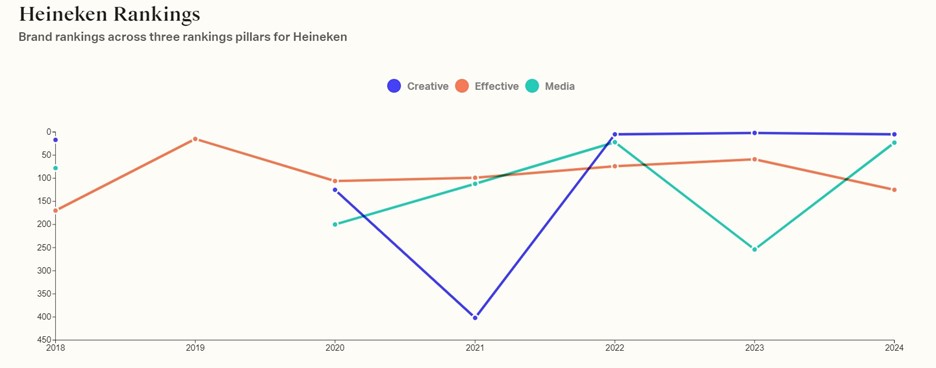
Heineken, W+K take Cannes Grand Prix

CANNES: 'Heineken's Legendary Journey', a multi-market integrated campaign from Wieden + Kennedy Amsterdam for beer brand Heineken, has won the Grand Prix at the 2013 Creative Effectiveness Lions.

The Grand Prix winner, which was praised by the judges for its strong creative idea and clear demonstration of business results, was one of seven Lions handed out for the category as part of this year's Cannes Lions International Festival of Creativity. Warc subscribers can browse the full case studies for over 100 entries here.

"Beer is such a tough category to move share. But we liked the insights, the execution, and that it grew volume, grew share and maintained a premium price," said Shelly Lazarus, chairman of Ogilvy & Mather and head of the Creative Effectiveness jury. "It showed significant increases in market share in every market. [The campaign] was consistent in all the markets - and that was pretty hard to do."

Jonathan Mildenhall, vice-president for global advertising strategy at Coca-Cola, added: "This global beer brand created a big idea – the legendary night out – and made it work across markets. Balancing creativity and commercial is what's unique about this award."

Overall, the Creative Effectiveness category, for which only Cannes Lions winners that can demonstrate continuing business results from their campaign are eligible, saw a 30% increase in entries this year, when compared to 2012.

Of the six other Lions-winning campaigns, three – 'From Crying to Buying', a UK campaign from adam&eveDDB for John Lewis, a retailer, 'Small Business Gets an Official Day', from CP+B/Digitas for financial services brand American Express Open, and 'Share a Coke', from O&M Sydney for Coca-Cola in Australia – came in for particular praise from the jury. Lazarus said there had been "great debate" about the Grand Prix winner.

The three remaining Lions went to 'Believe', for Lion Nathan's Steinlager from DDB Auckland in New Zealand, 'Australia's Largest Risk Mitigator', for financial services firm Insurance Australia Group from WHYBIN\TBWA Sydney, and 'Hard, Fast & Effective' from Grey London for the British Heart Foundation, a charity.

Russ Mitchinson, planning partner at DDB Sydney, pointed out the heavy presence on the shortlist of campaigns from Australia and New Zealand, suggesting that innovation in creativity was particularly strong in the region due to the relatively "low barriers to entry" for campaigns there, when compared to Europe and North America. "They can experiment, challenge themselves and do things differently because the business costs are also lower," he added.

Meanwhile, fellow jury member Orlando Hooper-Greenhill, director of global planning at JWT, advised next year's Creative Effectiveness entrants that merely demonstrating campaign success on the basis of social media data was not sufficient. "If you want to win a Lion, you have to prove effects on the brand," he said.

"We were struck by the remarkable breadth of entries," Lazarus added. "As a jury, we love the list of Lions. It represents the widest range of goals, ideas, media strategies and geographies."

Data sourced from Cannes Lions; additonal content by Warc staff, 18 June 2013

Print


Extended billing affects creativity

NEW YORK: The extended payment terms now being offered by major advertisers, such as Procter & Gamble and Mondelez International, have the potential to affect the creativity of advertising, as agencies adopt coping strategies, experts have said.

Brian Wieser, an analyst at Pivotal Research Group, noted that slower payment inevitably means higher interest costs for agencies. He suggested to Advertising Age that one way agencies were seeking to preserve their margins was to reduce expenses by putting lesser talent on those accounts that paid more slowly.

A former P&G procurement executive, Gerry Preece, now a consultant, agreed that agencies would be reluctant to put top staff on such business.

Stephen Dickstein, chief executive of Recommended Media, noted that slow payment in other territories, such as Italy and Poland, had resulted in consolidation into better-funded companies but, he argued, this had hit creativity.

Brett Colbert, chief procurement officer for agency holding company MDC Partners, was clear: "The best result remains that you pay the best people when they need to get paid, based on an industry best practice."

Other strategies being followed include generating early purchase orders. Judy Dusterberg, vice president of production-consulting company MRA Services, said that agencies were now doing estimates and starting the purchase order process long before the creative details were complete.

"So the money now will roll into the agency coffers in time for the award of the project," she said, adding that the long lead times to receive money had "made a big change in the whole business".

P&G has argued that its "supply-chain financing" will enable companies to leverage P&G's strong credit rating to get paid faster through banks using P&G's receivables as collateral.

And Mondelez claimed that extending payment terms to 120 days "allows us to better align with industry and make sure we compete on fair grounds, while simultaneously improving transparency and predictability of payment processes".

Data sourced from Advertising Age; additional content by Warc staff , 18 June 2013

Print


Retailers invest in tech solutions

NEW YORK: US retailers are looking to technology as an important growth driver over the coming year and plan to invest accordingly, a new survey has said.

The 2013 Retail Outlook Survey from KPMG, the tax and advisory firm, interviewed 101 senior executives, a third of whom worked for institutions with annual revenues exceeding $10bn and found that, after geographic expansion, information technology was the most frequently cited area for increased investment.

Some 40% of respondents intended to spend more on IT, compared to 61% who were planning greater expenditure on expanding their reach across the country.

Advertising and marketing/branding was another area frequently referred to for increased investment, by 24% of respondents.

"Technology is paramount to driving growth and enhancing customer engagement for retailers," said Mark Larson KPMG global retail leader.

"With consumer behaviour, spending and demographic profiles changing rapidly, it is absolutely critical that companies take an omnichannel approach to engage consumers, utilizing all the platforms at their disposal, including brick and mortar, online and mobile," he continued.

The particular technology-related trends identified by the executives included social media, mentioned by 71%, mobile and online shopping, named by 52%, and mobile and online promotions and coupons, cited by 51%.

Data and analytics were widely seen as important in many areas, including providing customer insight (72%), brand and product management (67%) and pricing decisions (56%).

But 43% of respondents rated their companies' data analytics literacy as only average.

"A key to success will be investing in technology to harness the vast amounts of structured data that reside in a company as well as the unstructured data online and in social media," said Larson.

"That data can drive the insights that will allow retailers to interact with consumers more effectively and capture more 'wallet-share', as well as identify new markets, new strategies and new operating models to generate growth and profitability."

Data sourced from PR Newswire; additional content by Warc staff, 18 June 2013

Print


Hotel brands expand in India

NEW DELHI: Hyatt, Carlson Rezidor and Accor are among the major hotel groups that are planning to expand in India over the next two years, despite the country's economic slowdown.

"India is one of the primary focus markets for Hyatt globally, along with the US and China," Dhruva Rathore, Hyatt Hotel Corporation Vice-President (Development), told the Press Trust of India and reported by Zee News.

"We plan to introduce all our brands in India in the next three years and are constantly looking for opportunities to increase our footprint through organic growth and conversions," he added.

Hyatt currently operates 17 hotels under four brands in India – Park Hyatt, Grand Hyatt, Hyatt Regency, and Hyatt Place – and will be adding Hyatt, Andaz and Hyatt House as part of its expansion plans. In particular, it is committed to adding another 15 Hyatt Regency hotels to the existing six.

"We have identified opportunities in specific markets which, apart from the metros, tier I cities, also include high growth tier II and III cities and upcoming resort/leisure destinations," said Rathore.

Meanwhile, Carlson Rezidor Hotel Group, owner of the Radisson and Park Plaza brands, is looking to significantly increase its portfolio in the next two years.

"We are aspiring to have 100 hotels in India by 2015, and currently we have 62 hotels in operation," K.B. Kachru, executive vice president of Carlson Rezidor Hotel Group, South Asia, was reported as saying in the Economic Times.

And Accor, the French hotel group which counts Novotel and Ibis among its brands, is preparing to build five new hotels in Chennai, including four in one complex, as it targets the market for meetings, incentives, conferences and exhibitions.

But observers have questioned Accor's strategy, noting that there is an oversupply of rooms in the city.

"Occupancy levels at large hotels are down to 50% from 65% about two months back. Small ones are finding it hard to get even 30%," an industry official said.

Data sourced from Zee News, Economic Times, Times of India; additional content by Warc staff, 18 June 2013

Print


Football fans turn to YouTube

LONDON: Young football fans are tiring of traditional media coverage of their sport and are increasingly seeking out alternatives on online channels, where the viewing figures are attracting the interest of advertisers.

In a development reminiscent of the rise of football "fanzines" in the 1980s – made possible by easy access to publishing technology – enterprising football enthusiasts are using video technology to broadcast their own take on the sporting world.

Nick Chiarelli of Future Foundation told the Financial Times that the serious tone and hackneyed phrases found in the content of traditional broadcasters and football clubs are not popular with fans.

"Football is not just about numbers and performance levels, it's funny, it's fun," he said. "You must not lose the humour, the banter and edge."

One man tackling the issue is nineteen-year-old Olajide Olatunji. He produces funny clips of himself playing Fifa, a football video game, for his Youtube channel, and currently has 2.3m subscribers and 463m views.

A more professional set-up is Copa90, created by Bigballs Films, which has 300,000 subscribers. That's more than the official channels of major clubs such as Manchester United or Chelsea.

Chief executive Tom Thirlwall said the YouTube site's average fan is a 19 year old male who doesn't get his football diet from a traditional weekly TV football highlights program.

Bigballs makes 52 hours of programming a year for Copa90, with original shows such as short documentaries on famous clubs and fans' stories. Traditional staples such goal clips and analysis by pundits are absent.

Oscar Ugaz, the former digital business manager at Spanish football club Real Madrid, observed that most clubs were focused on the big money – sponsorship deals, merchandise sales and season ticket renewals – and currently have no idea how to produce the "guerrilla content" that fans really want.

In the US, a new survey has also noted a shift towards online content: a quarter of fans there follow sports on social networking platforms.

The study for publisher Sporting News Media found that most social fans used Facebook (77%), followed by YouTube (47%) and then Twitter (33%).

Respondents said they expect connected TV to have the biggest impact on the way they consume sports in the next two years.

Data sourced from Financial Times, Broadcast Now, PR Newswire; additional content by Warc staff, 18 June 2013

Print


PC makers look to cheap tablets

TAIPEI: Computer brands such as Asus, Acer and Lenovo are turning to low-end tablets in a bid to maintain a relationship with consumers, according to industry experts.

In recent weeks these makers have announced or launched Android tablets priced at under $200.

Jeff Yang, Asus chief executive declared his intention of putting a tablet "in the hands over every consumer", while Acer expected its "value" tablets would help triple sales of that product.

"Even though it's not a very profitable business to go into, they have to be there in order to stay relevant," Pin Chen Tang, an analyst with Canalys, told the Financial Times.

And Alberto Moel, an analyst with Bernstein, the brokerage, described cheaper, small tablets as "the new battlefield for major PC [brands]".

Canalys estimated that this trend towards smaller, cheaper tablets has brought average selling prices down 12% in little over a year.

PC makers are also offering hybrid devices to consumers reluctant to commit themselves completely to a tablet, with products that can operate as either a notebook or tablet as required.

The push by PC brands into the lower end of the tablet market is likely to mean that tablets overtake desktops even sooner than has been previously forecast.

Earlier this year, IDC predicted that global shipments of tablets would surpass those of desktops this year and those of laptops next year.

And even more recently, the Pew Center found that the proportion of Americans owning a tablet had doubled in a year.

Data sourced from Financial Times; additional content by Warc staff, 18 June 2013

Print


Rate of global adspend growth to double

NEW YORK: Global advertising expenditure will grow at a rate of 3% during 2013, but this is expected to double to 6% in 2014, according to the latest forecasts.

Magna Global, the media management company, has predicted that worldwide adspend will total $486bn this year and will reach $515bn next year, reported MediaPost.

The US continues to be the biggest single market, accounting for almost a third of total spending, but its share will edge downwards, from 31.9% in 2013 to 31.8% in 2014 as other markets grow faster.

Latin America is expected to see the highest rate of growth this year and next, at 12.5% and 12.9% respectively. It is followed by the Asia-Pacific region, with figures of 5.9% and 7.4%.

Within the latter, China will be a strong performer, said Magna, growing from $42.8bn this year to $48.0bn in 2014, a 12.1% rise.

China is the third largest advertising market but is rapidly closing in on Japan, the second biggest country, whose spend is predicted to increase by a more modest 2.9%, from $51.7bn in 2013 to $53.2bn in 2014.

Magna expected Western European markets to stabilise in 2014, after a predicted fall of 1.6% in 2013. The outlook in Central and Eastern Europe was brighter, with expenditure growing by an average 7.6% this year. 

For 2014, Magna forecast that ad revenue across Europe, the Middle East and Africa would rise 3.3%.

In terms of media, digital will fuel much of the growth, increasing 13.4% to reach $113.6bn in 2013. While search will account for most of this (45.8%), the fastest-growing sector will be mobile advertising, where a 54% jump will see it attracting $12bn in spending.

Social media, up 39.6% to $8.2bn, and digital video, up 21% to $6.6bn, are also expected to perform strongly.

Television continues to attract the most adspend, accounting for 40.4% globally, but in 2013 the absence of major TV events such as the Olympic Games will mean a comparatively slow rate of growth: 2.2%. 

Among other media, Magna expected print advertising to continue to decline, with newspapers down 3.3% and magazines down 5.1%, to a combined total of $110bn in 2013.

Radio and out-of-home, however, were forecast to increase this year, the former edging up 1.1% to $32.bn, and the latter rising 9% to reach $32.6bn.


Data sourced from MediaPost; additional content by Warc staff, 17 June 2013

Print


India's TV crisis deepens

MUMBAI: Two more television networks, TV18 and Star India, have joined the growing number of broadcasters that have withdrawn their subscriptions to TAM, India's TV ratings body.

The afaqs portal noted that this was the first time large general entertainment channels had become involved in the quarrel. Neither of these two had previously complained publicly about TAM's methodology or sampling inadequacy.

The Advertising Agencies' Association of India (AAAI) and Indian Society of Advertisers (ISA) have said that they will continue to use TAM data, but as more channels drop out the two sides seem further than ever from resolving the dispute.

The exchange4media portal talked to media planners and industry experts to get their assessment of the situation.

The general feeling was that the two sides were talking different languages, with TAM assuming it was doing everything correctly while the broadcasters declined to publicly elaborate on their issues.

The experts said there was a genuine problem of ratings disparity that needed to be addressed in a mature fashion by both sides. One senior media planner acknowledged that TAM had to be rigid in its approach, which might appear unduly stern, or even arrogant, but argued that it should "openly bring the genuine issues of the broadcasters to the table for discussions".

Another media planner noted that the industry could ill afford another slowdown and said that "channels should rise above their personal agenda and work towards the betterment of the entire industry".

An observation that the broadcasters who had a problem with TAM were the ones whose ratings had gone down, indicated a degree of self-interest. "The job of TAM is to provide genuine viewership figures to the industry and not suggest how viewership of a channel can increase," remarked the chief executive of a Delhi media agency.

All agreed that the way forward was a working party involving both sides which would address the various concerns and resolve the issues.

Data sourced from afaqs, exchange4media; additional content by Warc staff, 17 June 2013

Print


Generic ads can outperform

BOSTON: Generic ads can be more effective than personalised ones depending on what stage of the purchase cycle the consumer has reached, new research has suggested.

Anja Lambrecht, Assistant Professor of Marketing at London Business School, and Catherine Tucker, Associate Professor of Marketing at MIT Sloan, carried out a randomised control trial on an online travel site that showed both generic retargeted ads or dynamic retargeted ads to consumers.

Writing in the Harvard Business Review, they explained that, on average, they found dynamic retargeting, in this case ads showing the specific hotel people had looked at, was less effective than a generic ad for the travel site itself.

Further analysis looked at the effectiveness of different types of retargeting before and after consumers had visited a travel review site and discovered that customers responded positively to both types of ad after having been to a site of this kind.

The authors suggested this difference was a result of the way people go about their purchases. When consumers have a general idea of what they want then a generic ad is best, but when they get more specific then personalised ads can work better.

"If a consumer has not yet decided whether to make a trip to Greece or to Florida, there is no point showing them a specific hotel in Greece," the report added.

Lambrecht and Tucker concluded that marketers needed to be careful when using personalized advertising.

"It may appear to be effective only because firms tend to show personalized ads only to their very best customers, possibly because of a lack of data on other potential customers," they argued.

"Optimal advertising content varies over time and should be honed to reflect the stage the customer has reached in the purchasing process."

Data sourced from Harvard Business Review; additional content by Warc staff, 17 June 2013

Print


Gulf retail market grows

KUWAIT: The Gulf retail market is expected to be worth $221bn by 2015, as a growing population and higher per capita income push sales up at a rate of 7.9% a year, a new study has said.

According to the the Kuwait Financial Centre (Markaz), retail is one of the fastest growing sectors in the countries comprising the Gulf Co-operation Council (GCC). These include Bahrain, Kuwait, Oman, Qatar, Saudi Arabia and the United Arab Emirates.

Markaz, reported the Gulf Times, divided the market into two distinct categories of consumer, each of which display differing purchase habits.

On the one hand there are the region's nationals, typically a high income, younger demographic, looking to buy luxury and electronics goods. On the other are working expatriates fuelling a demand for consumer goods.

The study also noted that "generous state subsidies, in the form of grants, lead to increased levels of disposable income aiding the retail industry".

The retail landscape has changed dramatically, with traditional souks replaced by modern shopping malls which have attracted international retailers.

But the report argued that this focus on large malls needs to change and that other retail formats should be accommodated, including modern "cash & carry", convenience and discount stores.

Dubai, which has positioned itself as a shopping destination, has been at the forefront of the development of malls, but a saturation point has arrived and fewer new malls are being built, while older ones are being revamped.

"The continued improvement and reinvention of Dubai's older malls is not an option but a necessity in an increasingly competitive market," Craig Plumb of the realtor Jones Lang LaSalle, told Gulf News.

"The essential objective of any mall redevelopment or repositioning should be to improve the tenant mix and therefore increase the turnover and level of retail spending that can be attracted," he added.

For some of Dubai's malls this has meant replacing luxury outlets with more mid-market stores, or bringing in a supermarket like Carrefour, or adding entertainment options like a cinema.

Data sourced from Gulf Times, Gulf News; additional content by Warc staff, 17 June 2013

Print


Agencies avoid government tenders

SINGAPORE: Opaque processes and a lack of feedback are deterring creative agencies from taking part in Asian government tenders for potentially lucrative marketing activities, a new report has found.

R3, the pitch consultancy, interviewed leaders of 13 creative, media and government agencies across the region as well as drawing on its own experience in this area.

"The main reason that marketing and creative agencies chose not to take part in government tenders is the general lack of transparency in the overall process," Goh Shu Fen, co-founder of R3, told Campaign Asia-Pacific.

"This could range from an unclear brief with poorly communicated objectives to the lack of clarity in the decision-making criteria," she added.

Agency complaints recorded in the report included the lack of feedback and the bureaucratic approach taken by government agencies.

One respondent spoke of weeks of effort and investment and then hearing nothing until the selection or shortlist was announced.

Another said paperwork was more important than the actual output and claimed their agency had been dropped for failing to complete a form properly.

A particular source of frustration was the tendency for government agencies not to adhere to their own deadlines, despite expecting the agencies to stick to tight turnaround times.

R3 argued that governments needed to make the tendering and evaluation process clear from the outset so that agencies understand how they will be judged.

It also suggested that contracts should run for longer than 12 months in order for agencies to achieve a higher return on their investment.

"The development of the expertise of in-house evaluation teams, the sharing of impartial advice and the actual benchmarking of the tender process against previous such tenders also leads to obvious improvement in the transparency of the entire tender process," said Greg Paull, co-founder of R3.

These problems are not unique to Asia, as R3 noted that agencies worldwide complained of similar obstacles.

Separately, Jeremy Caplin, chief executive of Aprais, a business relationship company, has argued that the quality of work produced is directly affected by the relationship between client and agency.

He told Warc's recent Measuring Advertising Performance conference that good clients get great work from their agencies while poor ones don't. Caplin also highlighted four areas to focus on, including briefing, approval, timing and behaviour.

Data sourced from Campaign Asia-Pacific; additional content by Warc staff, 17 June 2013

Print


Digital ad industry educates consumers

BRUSSELS: A pan-European consumer awareness campaign aims to empower internet users by educating them about the practice and role of online behavioural advertising (OBA), while enabling them to exercise greater control over the ads they receive.

The European Interactive Digital Advertising Alliance (EDAA), a non-profit organisation based in Brussels, is funding the "Unzipped" initiative, which is being launched in the UK before being rolled out in Ireland and Germany. The rest of Europe will follow in autumn 2013.

The campaign features ads with a zip, across the copy "Find out what goes on behind the ads you see online", that opens to reveal the blue, EDAA-licensed, OBA icon.

Clicking on the ad takes consumers to a website, www.youronlinechoices.eu, where, in clear, user-friendly language, they can find out about their online ad choices, how online advertising is used to support the sites and services they use and how they can safeguard their privacy.

The campaign "will provide a direct and visually appealing way for consumers to engage via the icon with what the European Self-Regulation Programme is all about: greater transparency, choice and control," said Oliver Gray, Director-General of the EDAA.

And Dominic Lyle, Director-General of the European Association of Communications Agencies, which is helping to co-ordinate the campaign, explained that there had been "a great deal of effort from all sectors of the European online advertising ecosystem, involving representative associations at both EU and national level, as well as the direct involvement of companies providing substantial amounts of inventory to ensure the campaign reaches a significant audience across Europe".

As well as helping consumers better understand online advertising, they will be made aware of the channels available for filing complaints.

Consumer complaint handling mechanisms in each national market will be handled by established and recognised national advertising self-regulatory organisations.

Data sourced from IAB; additional content by Warc staff, 17 June 2013

Print


Google takes over half of mobile adspend

NEW YORK: Google, the internet services giant, accounted for more than half of the $8.8bn spent globally on mobile internet advertising last year, and its share is expected to rise as the world market almost doubles in 2013.

Insights provider eMarketer estimated that Google took a 52% share of net mobile internet ad revenues in 2012, and that this would rise to 56% in 2013.

Total mobile internet advertising spending has increased dramatically, from just $1.53bn in 2011, to $4.61bn last year and a forecast $8.85bn next year.

Other companies are also growing fast, albeit from a far smaller base. Facebook, the social media site, had no mobile ad revenues in 2011, but recorded $470m in 2012, a figure which is predicted to increase 334% to $2.04bn in 2013.

In 2013 Facebook is predicted to earn more in mobile ad revenues than Google did just two years ago, but will account for only 13% of the total market.

Just as Facebook is a long way behind Google, so Twitter is a long way behind Facebook. eMarketer suggested that growth for the micro blogging site would be much slower than its competitors.

Twitter's net mobile internet ad revenues have grown from zero in 2011 to $140m in 2012 and are forecast to reach $380m in 2013, by which time it will take a 2% share of the market.

Combined, these three companies account for "a consolidating share" of mobile advertising revenues worldwide, said eMarketer. It predicted that the share of other players, including YP, Pandora, Apple and Millennial Media, would decrease.

However, eMarketer added that these firms would still see their mobile advertising revenues growing rapidly.

In particular, it said that YP, the online directories service, which accounted for 2.9% of mobile internet ad revenues last year, was well positioned in the mobile search market.

Google and Facebook are also the leading two companies in terms of ad revenues across all digital platforms, taking shares of 31.5% and 4.1% respectively in 2012. And eMarketer expected that Google's share would increase further, partly due to its continued monetization of YouTube.

Despite the dominance of Google and, to a lesser extent, Facebook, eMarketer observed that over half of all digital ad revenues worldwide went to companies in the "other" category.

"There is space for other players to emerge and potentially gain significant share," it said.

Data sourced from eMarketer; additional content by Warc staff, 14 June 2013

Print


Global brands strong in Asia

SYDNEY: Global brands such as Coca-Cola, Apple, Samsung and Google are among the strongest in Asia, although local brands dominate in certain markets, according to a survey from a Tokyo-based consultancy.

Nikkei BP Consulting's Brand Asia 2013 measured the images of 60 global brands common to 12 regions across Asia and selected brands local to each market. It looked at various factors including their friendliness, usefulness and perceived quality, while allowing for regional differences, to evaluate their overall strength.

Coca-Cola, Apple, Samsung, and Google got high marks for brand strength across many Asian markets, reported Inside Retail Asia.

All four scored highly on Nikkei BP's "innovative" rating, and the report noted that the "vigorous approach" of these brands meant people did not get bored with them.

In addition, they had adopted "sensitive responses to changes in the Asian consumer mind" which had helped them achieve a positive evaluation.

Local brands dominated in Myanmar, with satellite broadcaster Skynet topping the list, followed by City Mart, the supermarket, and KBZ, a bank. Myanmar was also notable for being the only country in the region where no internet brand featured in the top ten, a reflection of the political and economic situation there.

A local financial brand, Maybank, claimed the number one spot in Malaysia, a list which was otherwise dominated by foreign brands, with automakers Honda, Toyota and Mercedes-Benz taking the next three places.

A similar situation prevailed in Vietnam where local FMCG brand Vinamilk topped the rankings, with several foreign IT/home electronics brands in the top ten.

Nikkei also remarked on the relatively weak showing of Japanese brands in the region. Only Sony and Honda could claim to have a strong brand presence.

"Despite their active entry into other Asian countries in recent years, Japanese companies need to review their marketing strategies," Nikkei suggested.

Data sourced from Inside Retail Asia, Nikkei BP Consulting; additional content by Warc staff, 14 June 2013

Print


Adidas plans for Brazil World Cup

LONDON: Adidas, the sporting goods brand, wants to be the most engaging brand at next year's World Cup in Brazil, a senior executive has declared.

Nicole Vollebregt, senior vice-president of global marketing, told Marketing Week at an Adidas Lab event in London that the brand would look to imitate its successful use of social media during 2012's Olympic Games, and was already building its in-house capacity.

"We're going to bring fans along with us on the World Cup journey and give them access to content and experiences that they've never had before," she stated.

"That's something only we can bring because as a sponsor we have access to teams, players and assets that no one else has," she added in a veiled reference to rival Nike, which is not a sponsor but is the official sportswear partner of the Brazilian national team.

She also claimed that Brazilians and Adidas had football in common. "They're the football nation and we're the football brand and that shared passion is something we're really trying to tap into for 2014," she said.

But Adidas's ambitions extend beyond a 90-minute game. Vollebregt pointed to the company's diverse product range, which covers sport, lifestyle and fashion.

"I think we're in a unique position to encapsulate the whole essence of Brazil from pitch to street," she argued, "and this will be the first time you'll see a World Cup effort from us that's holistic – both sides of the brand from sport to style."

She rejected a suggestion that the brand's "formal and efficient" values would not play well in Brazil. "Our brand can be serious when we talk about innovations but that's changing and we're becoming less rigid in the way we present the brand – a lot younger and a lot fresher," she said.

Vollebregt also enthused about the tournament's possibilities as a showcase for its new technologies. "The World Cup is a stage where we launch all our new innovations," she said. "It's something we really work towards and get excited about."

Data sourced from Marketing Week; additional content by Warc staff, 14 June 2013

Print


Tobacco brands embrace "vaping"

LONDON: Leading tobacco companies are investing in electronic cigarettes as analysts predict that vaping – using a vaporiser to inhale flavoured nicotine – could overtake smoking within a decade.

Bonnie Herzog, an analyst at Wells Fargo bank in New York, told Reuters that the US market alone would be worth more than $1bn this year. And the appearance of celebrities using the product, including the likes of Leonardo di Caprio and Catherine Deneuve, is likely to give the sector a further boost.

"Growth is exponential and there are no signs it's slowing down," Katherine Devlin, president of the London-based Electronic Cigarette Industry Trade Association, told the New York Times.

"There is a huge amount at stake," she added.

The stakes are potentially high for both tobacco companies and ad agencies as e-cigarettes don't use tobacco and are not subject to the same restrictions on TV. "This presents a whole new revenue stream that they haven't had available since 1971," Emma Bazillian of AdWeek told WTVM.

AdWeek also noted that some e-cigarette brands had adopted the iconography of tobacco brands, citing the example of Blu e-cigarettes, whose ads feature a tough guy reminiscent of Marlboro Man.

Altria, the owner of Philip Morris and the Marlboro brand, is the latest to enter the market, announcing plans to launch e-cigarettes under the brand name MarkTen in the US later this summer.

Reynolds American, which makes Camel cigarettes, will next month extend the testing of its Vuse e-cigarettes to retail outlets in Colorado.

Imperial Tobacco has set up a venture called Fontem to develop the products e-cigarettes, while Lorillard, which manufactures Newport menthol cigarettes, bought a leading e-cigarette company last year.

And British American Tobacco, owner of the Kent brand, has a product under regulatory review in Britain.

The regulatory area is one that could hold back the development of the market, as different territories adopt different approaches.

The UK has just chosen to regulate e-cigarettes as non-prescription medicines, so that manufacturers will need a licence from 2016, though they will still be sold in general stores.

The EU is proposing limits on amount of nicotine e-cigarettes can hold before regulation kicks in, while the US Food and Drug Administration plans to regulate e-cigarettes as it does tobacco.

Medical opinion remains wary although supporters of the product argue that it will actually help people stop smoking.

That in turn could pose a challenge to companies such as Pfizer and GlaxoSmithKline which make nicotine-replacement gum and patches.

Data sourced from Reuters, New York Times, AdWeek, WTVM; additional content by Warc staff, 14 June 2013

Print


Small businesses offer better service

LOS ANGELES: Consumers are significantly happier about their service experiences with smaller companies, but tend to choose the lower prices offered by larger rivals, a new survey has found.

CreditDonkey.com, a card comparison and financial education site, polled more than 1,000 Americans aged over 18 for their views about customer service and customer satisfaction and found that 52% of respondents were likely to opt for a cheaper price over a better service.

This was despite the fact that 94% said their customer service experiences with small companies met or exceeded expectations, compared to just 64% with big businesses.

Charles Tran, founder of CreditDonkey, noted that over 80% of respondents said they had not bought something because they weren't happy with the customer service they were getting.

"The survey results should serve as a wake-up call for companies of every size," he said. "In this high-tech, fast-paced era, people want companies to respond to their concerns and questions with personalized service."

Small businesses were found to be much better than their larger counterparts at anticipating consumer needs (71% v 42%), anticipating their problems (64% v 34%) and following up (68% v 31%).

Only in the area of soliciting feedback did large companies perform better (74% v 66%).

A separate survey of small businesses focused on the sector's acceptance of mobile payments and found that two thirds were in danger of placing obstacles in the path of mobile consumers by not having mobile optimised websites.

TransFirst, a supplier of transaction services, polled more than 1650 merchants in service areas, three quarters of whom had 10 or fewer employees, and found that 82% didn't know if a purchase on their website had come from a mobile device or a PC.

But data from the other 18% indicated that mobile site visitors represented a significantly increasing portion of online sales.

"The mobile consumer is knocking at the small merchant's door," said Craig Tieken, Director of Product at TransFirst. "Business owners who aren't already up to speed with mobile payment acceptance need to have a viable plan of action to get there."

Data sourced from PR Newswire; additional content by Warc staff, 14 June 2013

Print


Localisation vital for Asian success

SYDNEY: Emerging Asian nations will account for around a quarter of global consumer products markets by 2016 and brands will have to develop localisation strategies to take the fullest advantage, a new study has said.

Ernst & Young, the global accountancy company, canvassed the opinion of 276 Asia-based senior executives of leading consumer products companies and retailers in eight markets and found that 69% thought emerging markets would be the main driver of growth and profit over the next three years, reported Inside Retail Asia.

Kristina Rogers, global consumer products emerging markets leader at Ernst & Young, said that these markets would also account for 37% of total consumer products growth.

She noted that those global businesses looking for growth in the region were finding tough competition from well-established local and multinational players.

"Global companies need to be agile and light on their feet, by putting consumer value first and foremost, in order to win over the increasingly sophisticated and demanding Asian consumer," she said.

She also suggested they would need to "adopt a highly disruptive approach to managing their business through selective localisation and above all, flawless execution".

The report outlined an approach to localisation that involved greater local autonomy, granularity, focus and agility.

Andrew Cosgrove, Ernst & Young global consumer products lead analyst, echoed this requirement.

"Global CP companies need to adopt a selectively localised portfolio approach across all the elements of the supply chain from conception to consumption," he said.

"Whilst this approach incurs higher costs in terms of time and resources, versus a universal approach, it is a price that companies must be prepared to pay in order to capture profitable growth."

Companies should also note that the concept of localisation extends beyond the national level to apply within countries as well.

A recent McKinsey study observed that consumer buying habits varied greatly across Indonesia, and said brands should consider localising products and value propositions down to the regional level.

Data sourced from Inside Retail Asia; additional content by Warc staff , 14 June 2013

Print


Unilever explores crowd-sourcing

SINGAPORE: Unilever plans to expand its use of crowd-sourcing to create more relevant marketing campaigns for all its brands.

A partnership with eYeka will see the co-creation platform based in France use its online community to develop new campaigns for the FMCG giant across Asia-Pacific and the Middle East, Russia and South Africa.

Rahul Welde, Unilever's vice-president (media) for Asia, Africa, Middle East, Turkey and Russia told Campaign Asia-Pacific that the company intends to engage more fully with its most creative consumers.

"The objective is to build a great creative product working very closely with Unilever's agencies, and create a stronger ecosystem and platform," he said.

"Ultimately, this agreement will accelerate the development of a culture of co-creation and collaboration that drives innovation and creativity," he added.

For eYeka, crowd-sourcing can give major brands a considerable competitive advantage by turning to consumers for ideas.

Francois Petavy, CEO of eYeka, said: "Brands and their agencies are opening up to creative ideas from more diversified sources such as communities of consumers."

"We believe in a new open model where brands and their agencies collaborate with consumers and other non-traditional players on a sustainable basis," he added.

Petavy argued in a recent blogpost that crowd-sourcing was an idea whose time had come and it was set to take off in 2013. He said it was capable of solving real business problems and that ROI could be demonstrated.

And the Innovation Excellence website listed six partnerships, including the Unilever-eYeka agreement, that it said proved that crowdsourcing was going mainstream.

The others included Deloitte and Kaggle, Sony CEA and Mofilm, Edelman and Poptent, Booz Allen Hamilton and Innocentive, ADK and eYeka.

Data sourced from Campaign Asia-Pacific, Innovataion Excellence; additional content by Warc staff, 13 June 2013

Print


Automakers are greenest brands

LONDON: Toyota, Ford and Honda have topped the Interbrand 2013 list of 50 Best Global Green Brands, with Nissan and Volkswagen also appearing in the top ten.

The brand consultancy looked at the gap that exists between a company's environmental performance, as assessed by Deloitte, and public perception of the brand's green credentials, produced by Interbrand's consumer research.

Toyota, leading the list for the third year running, continues to dominate the hybrid market with its Prius model. Carmakers that created innovative products to prove their commitment to sustainability, as Ford did with EcoBoost and Nissan with LEAF, benefited accordingly in consumer perception.

Toyota went further, however, examining the future of mobility by developing a low carbon community called the Toyota Ecoful Town in Toyota City.

"What makes the annual Best Global Green Brands report unique and valuable is that it examines performance and perception in action," said Jez Frampton, Global Chief Executive Officer of Interbrand. This, he added, enabled corporations to plan strategies to move forward.

The technology category dominated the overall report with 12 brands appearing. Panasonic was the most prominent, at fourth, offering innovative, eco and smart solutions said Interbrand.

David Pearson, head of global sustainability at Deloitte's, noted that sustainability issues continued to rise up the business agenda.

Nowhere was this more clear than with clothing and retail companies, with the report noting that social media communities were keeping a close eye on factory safety throughout the world in the light of the Bangladesh factory collapse.

Adidas (15th on the list), Nike (31st), H&M (42nd) and Zara (48th) were the top apparel brands, and all are using supply chain reform not just to cut costs, as before, but to make a statement to consumers about what they stand for.

Data sourced from Interbrand; additional content by Warc staff,, 13 June 2013

Print


Mobile media to exceed $200bn by 2017

BOSTON: Global spending on consumer mobile media consumed via handsets will rise from $161bn in 2012 to over $200bn by 2017, according to a new study.

The Global Mobile Media Forecast: 2001-2017 report, from Strategy Analytics, a provider of consultancy and marketing intelligence, suggests there will be huge growth in handset browsing, mobile applications, mobile games, mobile music, mobile video, mobile television, ringtones, wallpapers and alerts.

Mobile advertising will become an increasingly important source of revenue, it said, more than tripling to $42bn by 2017, and accounting for 18% of total mobile media spending.

"Mobile is becoming a core part of digital advertising, with companies like Google making it easier for advertisers to deliver ads to mobile devices," said David Kerr, vice president at Strategy Analytics.

He also noted that Facebook derived 30% of its digital ad revenue derived from mobile, which, he said "underlines advertiser demand to test and experiment with well-targeted mobile inventory provided by popular social networks". 

Meanwhile, Benedict Evans, a consultant at Enders Analytics, noted a shift away from PCs towards mobiles, with Apple, Google, Amazon and Facebook driving the agenda.

"All of them, being on the phone and controlling the phone, is what controls the future and so they are all vitally important," he told Media360 this week, reported Media Week.

He added that by 2017, three quarters of literate adults would possess smartphones, which he described as the point at which "mobile and technology merge."

A factor containing growth, however, will be lack of infrastructure in many markets that can handle the expected volumes of mobile data.

Nitesh Patel, director of the Wireless Media Strategies research programme, said: "Going forward the challenge will be driving mobile media growth in less mature mobile data markets, where a large proportion of users have basic or feature phones, remain served by 2G networks, but where demand for information, content and entertainment on mobile devices will be strong."

Data sourced from PR Newswire, Media Week; additional content by Warc staff, 13 June 2013

Print


Indian ecommerce fuelled by advertising

MUMBAI: Indian ecommerce is growing rapidly, but industry insiders warn that current media spending has to be curtailed sharply for the sector to be sustainable.

According to the Economic Times, internet use in the country and 3G penetration will grow at a compound annual rate of 60% over the years to 2015, resulting in over 180m people in India with access to online retailing.

However, as companies seek to tap into this market they have been heavily reliant on traditional media, such as TV or billboard advertising, which has pushed up costs and further eroded margins in what is already a relatively low-margin business.

Seema Gupta, assistant professor of marketing at IIM Bangalore, noted that while Amazon spends 3.5% of its revenue on marketing, Indian counterpart Flipkart spends an unsustainable 20%.

Nevertheless, ecommerce sites continue spending on traditional advertising at levels last seen during the dot-com boom, according to Dr Subho Ray, president of the Internet & Mobile Association of India, who suggested that they believe the necessity is to stoke unrivalled brand awareness.

Meanwhile, Dr Alok Kejriwal, CEO of games2win, suggested that ecommerce companies need to build up brand loyalty and recognition virally and that differentiation by customer service rather than just placing adverts is essential.

Nevertheless, the big deals go on. Jabong.com, another e-tailer, recently tied up with Bollywood stars to launch a clothing range connected to the stars of the film "Yeh Jawani Hai Diwani".

Flipkart, meanwhile, has created brand awareness based on an advertising campaign that places children in more grown-up situations. Ravi Vora, vice president for marketing at the firm, said: "Advertising has helped us in creating interest amongst the target base. Now the challenge is to continue being relevant to them."

But Kejriwal disagreed with this point of view. "Imagine if a Flipkart spent some of that budget sending customers a surprise gift with a purchase... that will get them loyalty better than some cutesy film featuring kids with adult voices," he said. 

Data sourced from Economic Times; additional content by Warc staff, 13 June 2013

Print


Phone contact important for loyalty

SAN LUIS OBISPO: Keeping lines of communication open with consumers is the single most important factor in maintaining customer loyalty and traditional methods are best, a new survey has claimed.

Impact Learning Systems, a training and consultancy firm, ran a global survey with thousands of participants in recognition of Customer Loyalty Month to identify best practice. Its surprise conclusion was that 62.5% of companies attempted to re-engage with lapsed clients via telephone rather than more up-to-date media.

To keep lines of communication open, the majority of respondents therefore maintained a 24-hour call centre (52.8% of respondents), with 45.8% offering voicemail, 40.3% employing website FAQs and 30.6% using social media.

Although social media is moving up the loyalty agenda, according to the survey only 2.8% of attempts to reach out to such clients came via this format, behind email, on 20.8%. Direct mail, however, would seem to be in decline as only 1.4% of contacts were by this means.

The survey also found that 52.8% of companies test their clients' satisfaction rates by customer surveys, with personal conversations coming second on 36.1% and focus groups a distant third on 4.2%.

Maintaining engagement with loyal customers was achieved by offering discounts (36.1%), followed by offering gifts (12.5%), loyalty cards (4.2%) and entertainment (2.8%).

The study found, meanwhile, that when requiring customer service most clients preferred telephone conversations, with email coming second and live chat third.

A recent Admap article noted, however, that technology is driving a significant shift in consumer behaviour and blurring the line between online and offline engagement, which requires brands to rethink how they drive customer loyalty.

It quoted international research from ICLP which found that consumers in emerging markets were leading the way in their use of newer channels for brand interaction and argued that brands need to have new media-based strategies to drive greater loyalty with consumers in those countries.

Data sourced from Impact Learning Systems, Admap; additional content by Warc staff, 13 June 2013

Print


Britons find digital ads annoying

LONDON: Over half of UK consumers say online adverts are invasive, distracting and annoying and a multinational survey has found that the adverts are even less popular in France and Germany.

A survey for Adobe, the Californian software maker, of over 3,000 consumers across the three countries found that 62% of Britons surveyed found digital ads "annoying", while 45% found them "invasive" and 44% "distracting", Campaign Live reports.

The report, called 'Click Here: State of Online Advertising', found that 70% of Britons believed that television advertising remains more important than the online variety, but despite this web ads were in the top three for preferred means of advertising, and this was the case only in the UK amongst the countries surveyed.

In Britain, 39% favoured print advertising, 23% television and 12% websites. This compared to France, where 31% preferred print, 24% billboards and 23% television. In Germany, these figures were 28% for print ads, 23% billboards and 21% window displays.

"Some digital advertising is failing to hit the mark," said Mark Phibbs, vice president of marketing for EMEA at Adobe. "While digital provides great promise, often it is not being delivered in an emotionally compelling or targeted way," he added.

Adobe's report highlighted that the crucial factor in advertising is content, with 68% of Britons believing they should tell a unique story. John Lewis and Guinness were among the most highly praised ads in the survey.

Humour was also described as crucial by 92%, who believed this was a more effective tool than providing ads that were "sexy".

"We think online advertising can learn from traditional advertising in three ways," said Phibbs. "Is it beautiful and eye-catching? Is it integrated? Do consumers have control over it?"

Finally, asked about social media, 49% of those surveyed said that they would favour seeing a "dislike" option for a brand, while 76% argued that ads targeted on online behaviour could be disturbing.

Data sourced from Campaign Live: additional content by Warc staff, 13 June 2013

Print


Online video can challenge TV

THETFORD CENTER: Marketers are increasingly looking at online video as an alternative to television, as many feel it can achieve as good or better levels of engagement and awareness for the same cost. 

Marketing Charts cited research from AOL which surveyed 772 respondents from leading brands, media and creative agencies in the UK, Europe and North America.

It found that 58% thought they could get a better share of engagement with online video than with TV for the same investment. A further 15% said online video would achieve the same amount of engagement.

In terms of awareness, respondents were a little more cautious, but 47% still felt online video could generate greater awareness than TV for the same investment, while 24% said it would match TV.

Marketers are backing their beliefs with hard cash, as 73% of the survey said they had increased their investment in online video in the past 12 months. TV and display budgets were the most affected as money was redirected from these into online video.

An earlier survey by Digiday and Adap.tv found a similar pattern of TV and display budgets being raided to fund online video, but it also noted that 80% of buyers regarded online video as a vital complement to TV and suggested that "the cannibalisation of display may proceed even more rapidly than that of television".

Targeting (87%), reach (85%), content (81%) and price (80%) were the most important factors cited by respondents when planning an online video campaign.

They also indicated that increased spend in the future would be driven by better audience targeting (73%) and measurement (67%).

As to specific formats, 73% of respondents planned to spend more on pre-roll, and 53% were looking to increase spend on social.

Data sourced from Marketing Charts; additional content by Warc staff, 12 June 2013

Print


New threat to Indian TV ads

NEW DELHI: The Advertising Agencies Association of India (AAAI) has warned that a move by several leading broadcasters to withdraw from TAM, the local television rating agency, could lead to a "collapse" in TV as an advertising medium. 

The Economic Times reported that NDTV group, Sony Multi-Screen Media and Times TV Network had written to TAM seeking to remove themselves from the system.

And, according to Livemint, a leading figure at one of these networks, speaking anonymously, said: "This measurement system is broken and we cannot keep paying for it."

Arvind Sharma, President AAAI and chief executive of Leo Burnett India, said that broadcasters around the world often had issues with measurement systems and argued that was not a reason to abandon them but rather to improve them.

"The move by broadcasters to discontinue with ratings is ill-advised and not in the interest of advertisers, advertising agencies or broadcasters," he stated.

"It will lead to overpaying and underpaying of advertising time, both of which will lead to a collapse of TV as an advertising medium," he added.

A statement from the AAAI outlined the need for an established ratings system that allowed advertisers to buy airtime with confidence and that enabled agencies to carry out analysis to effectively reach a brand's target audience.

A new rating system is planned under the auspices of the Broadcast Audience Research Council (BARC), but, Sharma noted, those were "some time away and until they are released it is critical to continue with the current system".

Several media buyers indicated their intention to continue using TAM. "Ratings are based on a sample survey and not a census, so there will be estimation errors but that does not mean the rating system should be stopped," said Sam Balsara, chairman of Madison Communications.

The issue of measurement was raised by broadcasters at the recent FICCI Frames conference when Uday Shankar, chief executive of Star India, complained he did not know how many viewers his network catered to.

"How can this industry move forward without knowing basic facts such as these?" he demanded.

And a more recent clash between broadcasters and agencies over billing methods led to TV commercials temporarily being taken off the air.

Data sourced from Economic Times, Livemint; additional content by Warc staff, 12 June 2013

Print


Americans embrace tablets

WASHINGTON DC: The proportion of American adults owning a tablet has almost doubled over a year, with Apple's iPad the top choice according to two new reports 

The Pew Research Center surveyed 2,252 adults during April and May as part of its Internet & American Life Project and found that 34% of adults owned a tablet, up from 18% a year ago.

The device was favoured by older groups, with almost half of adults (49%) aged 35-44 years possessing one.

In addition, ownership was skewed towards the more affluent and better educated. Some 56% of respondents living in households earning at least $75,000 per year had a tablet, as did 49% of college graduates.

These two groups also saw some of the greatest increases in ownership over the past year, but the fastest growing demographic was parents with children at home, where ownership rose from 26% in April 2012 to 50% in May 2013.

Pew found no statistically significant differences in tablet ownership between men and women, or between members of different racial or ethnic groups.

A separate survey for Frank N. Magid Associates, forming part of its Magrid Media Futures study, found that tablet penetration had increased 47% over a single year and that a majority of online Americans (53%) owned one.

In terms of brands, Apple was the preferred option, with 53% of all tablet owners having a full-sized iPad, a figure which rose to 59% when the iPad mini was included.

Amazon's Kindle Fire had risen to 31% of tablet owners while Samsung tablets accounted for 19%. Magrid noted that 32% of tablet owners had multiple brands of tablet devices in their household.

Spending on apps had also grown in line with the increased penetration, rising 42% year-on-year to reach $2.3bn.

Video viewing was a widespread habit, with 63% of tablet owners doing so regularly, often full-length movies and TV shows.

Magid predicted a 20% growth rate for tablets over the next year.

Data sourced from Pew Research Center, Frank N. Magid Associates; additional content by Warc staff, 12 June 2013

Print


London taxis get new digital ad space

LONDON: Brands looking to target consumers in London will soon be able to place ads on digital panels installed on the tops of the city's iconic black cabs.

Transport for London, the city's transit authority, has approved a standard for roof-mounted digital advertising and Brightmove Media, an innovator in the sector, is planning to be first to market with its TaxiCast product.

"We go live in two weeks time with 25 taxis in London," Piers Mummery, Brightmove's chief executive, told the Wall Street Journal, adding that equipment was being fitted and he already had committed advertisers.

The roof-mounted panels are centrally controlled to offer advertisers geo-location and time-targeted digital advertising on the streets of London.

"Digital advertising on taxi roofs not only changes the London skyline, but also offers advertisers and brands tailored advertising at street level," said Mummery.

The twin 400×48 resolution LED displays are Internet-enabled via the 3G network, while sensors monitor location, time, temperature and humidity, allowing advertising to be controlled dynamically.

That means, for example, that ads for ice cream could be launched when the temperature reached a certain level, or ads for shops could be triggered when a taxi drives past them.

A rival offering from Eyetease Media, iTaxitop, is expected later this summer, which is similar in most respects to that of Brightmove, although it will have a slightly larger LCD display.

Over the course of three months Mummery anticipated that Brightmove's 'First Fleet' would deliver over 2m ads to the city, day and night.

Data sourced from Realwire, Wall Street Journal; additional content by Warc staff, 12 June 2013

Print


Brands target China's middle class

China's aspirational middle class is set for continued massive growth, representing huge opportunities for marketers, a report has found. 

Research by McKinsey suggests that by 2022 75% of the country's urban consumers will be earning $9,000-$34,000 a year, compared to only 4% in the year 2000. That figure had risen to 68% in 2012.

Continued economic and financial reform will see urban household income at least double by 2022, and within the blossoming middle class the upper range will become increasingly dominant.

McKinsey has found that these consumers are more likely to buy laptops, digital cameras and specialised household items such as laundry softener. Products of this kind were was bought by 56% of the upper middle class last year, compared to just 36% of the mass middle class.

Expansion in the sale of luxury goods driven by the ultra-wealthy consumer also continues apace, with 16-20% growth over the last four years. By 2015, it is likely that a third of the money spent around the world on top-of-the-range products including bags, watches, jewellery and clothing will be spent by Chinese consumers on the mainland or elsewhere.

McKinsey has identified a group which it calls Generation 2, which consists of some 200m people in their teens and twenties, who have been brought up in an age of largesse, are more self-confident and brand-conscious than their elders.

Teenagers in this group are also exercising ever more influence over family buying decisions, meaning they are especially fertile ground for exploration by companies.

"The new upper-middle-class opportunity is where the future is," said Alan Jope, head of Unilever's business in north Asia. "It's huge across categories and even more important than the luxury class of consumers."

Nevertheless, companies should not ignore the lower tier consumer, McKinsey believes, given the sheer size of the mass market. To that end, some companies are adopting a dual strategy, to target both the high end and the more general consumer.

Michael Yeung, president of Wrigley Asia Pacific, added: "Consumers in coastal China may be getting wealthier and trading up, but China's interior and lower-tier cities will continue to be a vast market for us."

Data sourced from McKinsey; additional content by Warc staff, 12 June 2013

Print


Carrefour expands in Africa

PARIS: Carrefour, the retailer, is expanding its presence in Africa in a bid to take advantage of high economic growth rates and the changing spending habits of the region's burgeoning middle class. 

In a joint venture with CFAO, the consumer goods distributor, Carrefour plans to launch stores in eight countries, including Cameroon, Congo, Côte d'Ivoire, the Democratic Republic of the Congo, Gabon, Ghana, Nigeria and Senegal, reported just-food.com.

Joseph Robinson, a lead consultant at the Conlumino research agency, said: "Retailers are slowly coming to acknowledge that factors such as growing middle classes, mobile technology and improving infrastructure are slowly driving the continent to prominence." 

Emerging market consultancy Novirost described Nigeria as "the big prize". But Cameroon is also promising, with Euromonitor, the insights provider, forecasting that retail sales will rise from $221.1m last year to $561.1m by 2017.

Nevertheless, there are problems for FMCG companies seeking to break into the African market.

Izaskun Bengoechea, research manager for Euromonitor in Cape Town, noted that the region lacked "strong formal retail organisation", and that while the growing middle class does hold promise, spending remains low by European standards.

Success in Africa is dependent on getting consumers to identify with a company's brand, according to Michael Wood, co-founder and director of Aperio, the consultancy.

Writing on bizcommunity.com, Wood suggested that FMCG groups needed to be sensitive to both regional and local preferences. 

He noted that Procter & Gamble, the FMCG group, often reshoots its television ads with local actors, so that while the same script might be used in Nigeria and Kenya, a local identity is maintained.

Appealing to local tastes is also crucial, and Wood cited SAB Miller, the brewer, as an example. It brews different beers for different countries, using maize, sorghum or cassava according to local preferences.

He also counselled careful targeting in the youth market, which is growing and can provide long-term success for a well-marketed brand. However, given the lower spending power of the average consumer, affordability remains a key issue, he said.


Data sourced from justfood.com, bizcommunity.com; additional content by Warc staff, 12 June 2013

Print